Scientist Spotlight
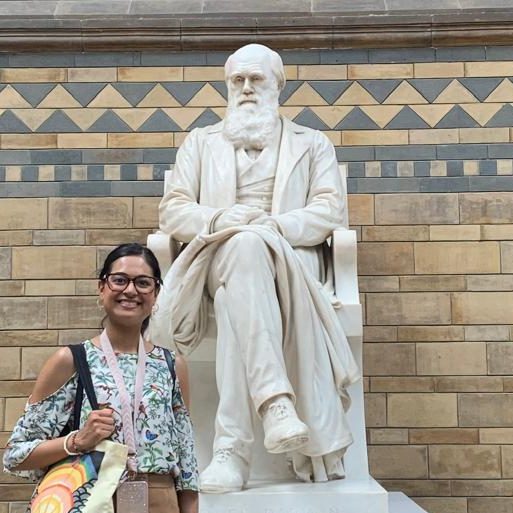
Charles Darwin (1809 - 1882)
Charles Darwin was an explorer, natural historian and author of the famous
"On the Origin of Species" book published in 1859.
His book described the theory of evolution by natural selection: the concept that species change over time because individuals with advantageous traits are more likely to survive and reproduce.
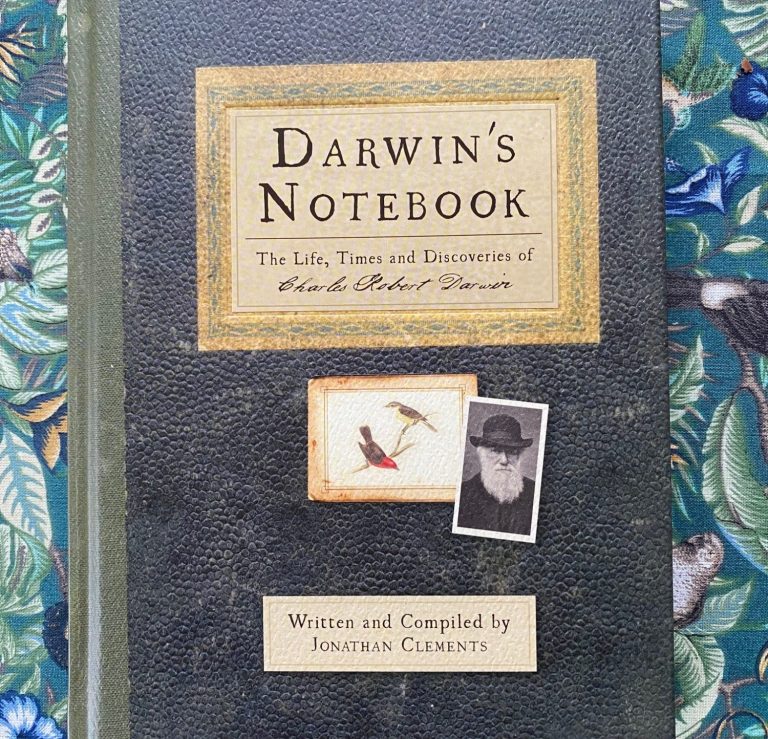
The book set the foundation of modern biology and is referenced in "Darwin’s Notebook" by Jonathan Clements, a biography that I received as a gift. This
engaging book guides you through Darwin’s life by means of his own journals and letters, including the unforgettable years aboard the HMS Beagle and the gradual development of his revolutionary theories.
Admittedly, I’m only halfway through, but it’s already a book I’d recommend to anyone interested in biology or natural history.
Also, my favourite quote from the book is below, which I think sums up his excitement during his travels on the diversity of the natural world:
“My mind has been since leaving England a perfect hurricane of delight and astonishment”
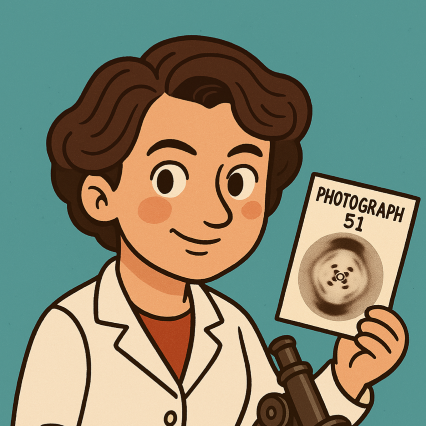
Rosalind Franklin
(1920-1958)
Rosalind is most notable for her contributions to the discovery of DNA’s double helix structure.
Together, with her graduate student, Raymond Gosling, they captured an image of DNA using a process called X-ray diffraction [1]. The image is known as Photograph 51 and was integral evidence that DNA was indeed a helix and in its B form, which is the most recognised and functional in the natural world [2].
What you might not know is that her family were involved in the Kindertransport initiative in the build up to World War II, involving the relocation of Jewish children from Germany to the British Isles [3].
Up until her death of ovarian cancer, she continued researching the structure of viruses using X-ray
diffraction and her research set the foundation for future discoveries in molecular biology [4].
It is widely known that, because she was a female, her research was largely unacknowledged in the
scientific community when she was alive, as were her efforts to this major discovery. Now, more than ever, we see that her unwavering determination and knowledge has advanced our understanding of DNA, but it is also a stark reminder of how we must continue to raise awareness and celebrate the contributions of female scientists.
References:
[1] Cobb, M. and Comfort, N. (2023) What Rosalind Franklin Truly Contributed to the Discovery of DNA’s Structure. Nature. [Online] 616 (7958), pp. 657–660. doi: https://doi.org/10.1038/d41586-023-01313-5
[2] Oppenheimer, S.B. (2023) Photograph 51, Rosalind Franklin and DNA Structure. Frontiers in Education Technology, 6 (3), pp.1-13. doi: https://doi.org/10.22158/fet.v6n3p1
[3] Rosalind Franklin University of Medicine and Science (2020) A Scholar in the Making. [Online] Available at: https://www.rosalindfranklin.edu/rf100/scholar.html
[4] Cramer, P. (2020) Rosalind Franklin and the Advent of Molecular Biology. Cell, [Online] 182 (4), pp.787–789. doi: https://doi.org/10.1016/j.cell.2020.07.028